Healthcare Deferred Maintenance: A $300B Problem That Won't Wait
U.S. healthcare facilities face over $300 billion in deferred maintenance. This article examines why the backlog keeps growing, what it costs when critical infrastructure fails, and seven concrete steps health system leadership can take now.
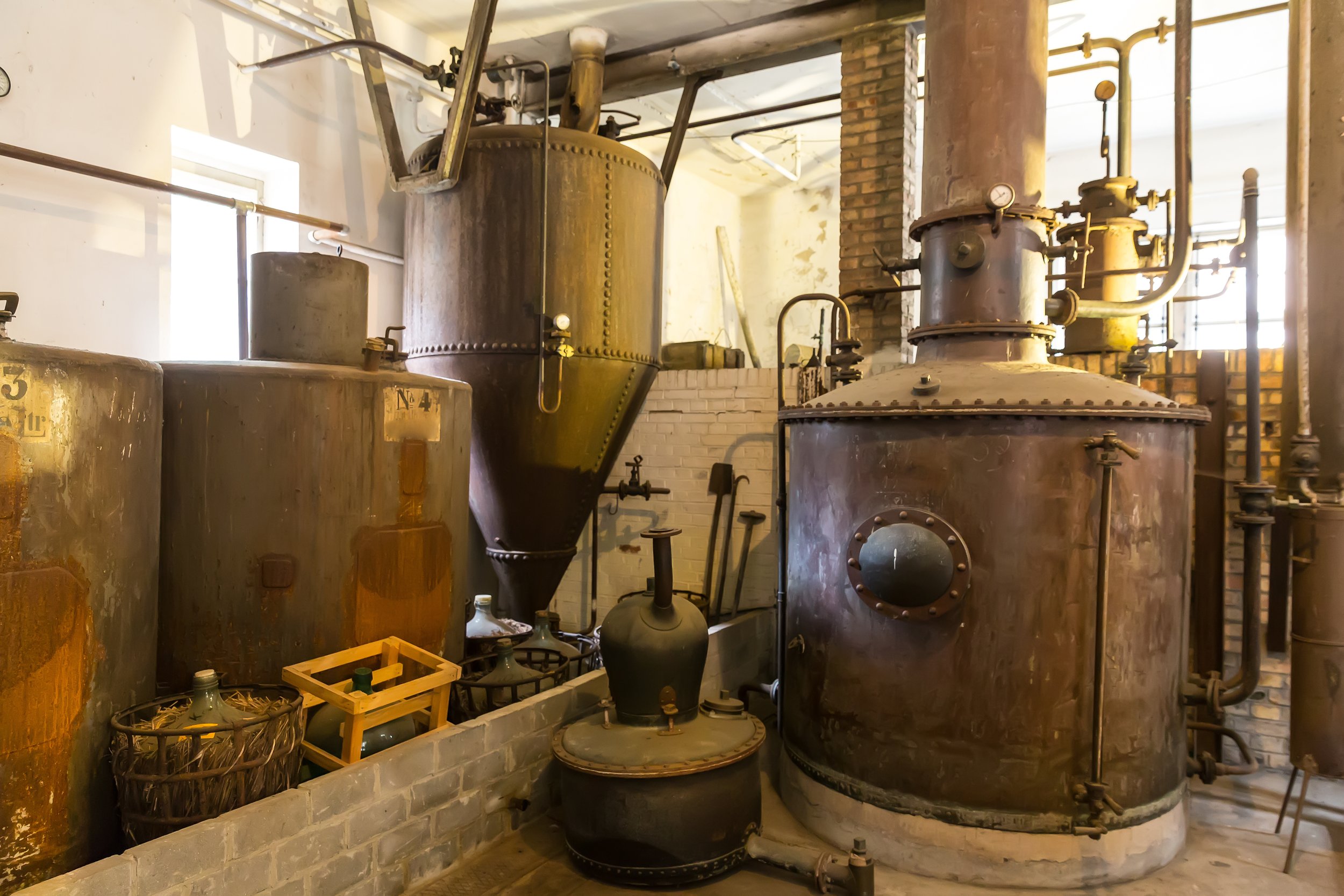
Deferred maintenance in the healthcare world is the elephant in the room that everyone pretends they don’t see. It’s the shiver that makes every Facilities Manager quake and keeps them up at night as year after year they are denied the needed capital to properly maintain or replace their mechanicals, always outvoted or spoken over for a new MRI or clinical piece of equipment instead.
What is not understood, or perhaps not communicated to the severe degree of its state, is that if the critical facility equipment fails that has been deferred one too many times, the new MRI, new OR robotics, or latest AI software won’t be able to operate (and generate revenue) because the building will now be closed.
U.S. healthcare facilities face over $300 billion in deferred maintenance, and will continue to grow as the gap between revenue and expenses expands, exponentially so for rural critical access hospitals and systems.
Why Has It Been Deferred?
The honest answer is that deferred maintenance is a slow-moving crisis that rarely announces itself, until it does. Healthcare leadership doesn’t ignore it out of negligence. They defer it out of necessity, competing priorities, and a financial structure that was never fully designed to sustain aging infrastructure. Several forces have converged to create the backlog we see today:
Thin Margins and Impossible Tradeoffs. The median operating margin for a U.S. hospital sits in the low single digits, and that’s for the ones that are profitable. For rural and safety-net hospitals, margins are often negative. When finance committees meet to allocate capital, the revenue-generating investment almost always wins. A new surgical robot has a clear ROI story. A chiller replacement or aging electrical panel does not, until it fails.
An Aging Physical Plant. A significant portion of U.S. hospital infrastructure was built following the Hill-Burton Act of 1946, which funded a massive wave of hospital construction across the country. That means a large share of America’s healthcare buildings are now 50 to 70+ years old. Systems designed to last 20–30 years are being pushed well past their useful life, and the backlog compounds with every year of delay.
Reimbursement Doesn’t Cover the True Cost of Care. Medicare and Medicaid reimbursement rates are set by policy, not by the actual cost of running a facility. Capital reinvestment, the money needed to maintain and replace physical infrastructure, is simply not adequately factored into the reimbursement equation. Hospitals are, in effect, subsidizing the federal government’s underfunding with their own deteriorating buildings.
COVID-19 Dealt a Devastating Blow. The pandemic wiped out billions in hospital revenue almost overnight as elective procedures were canceled and costs surged. Maintenance budgets were among the first casualties. Systems that were already behind fell dramatically further behind between 2020 and 2023, and many have not recovered.
Deferred Maintenance Is Invisible: Until It Isn’t. A broken MRI machine triggers an immediate response. A failing cooling tower, aging fire suppression system, or corroding steam pipe? Those deteriorate quietly, right up until they cause an emergency shutdown, a patient safety event, or a Joint Commission citation. The insidious nature of infrastructure failure makes it easy to push to next year’s budget cycle, and then the year after that.
What’s the Solution?
There is no single fix, but there is a path forward. Here are seven actions healthcare organizations can take now, each of which moves the needle at the organizational, financial, or policy level.
1. Make the Business Case in Language Leadership Understands. Facilities leaders must reframe deferred maintenance not as a cost center problem, but as an enterprise risk and revenue protection issue. Every piece of deferred critical infrastructure represents a potential revenue disruption. Take a fan motor serving an operating room suite. When that unit fails, the OR goes offline. The minimum timeline to design, permit, procure, and install a replacement runs 48 hours or more. That is 48 hours of zero revenue from some of the highest-margin services in the building. Rush the timeline and the costs compound fast: overtime labor, priority manufacturing, and emergency shipping routinely add 25% to 50% to the total project cost, on top of the revenue already lost. Now consider a second scenario with an even broader blast radius. Hospital data centers and server rooms depend on dedicated HVAC systems to maintain the precise temperature and humidity levels required for continuous operation. When that cooling infrastructure fails, the consequences extend far beyond the IT department. Clinical systems go down. Electronic health records become inaccessible. Real-time monitoring equipment loses connectivity. And if an operating room is mid-procedure when systems fail, the disruption becomes a patient safety event. Restoring a data center HVAC system is not a same-day repair. Emergency procurement, coordination with facilities and IT, and system re-commissioning can take days, during which the organization is operating in a degraded state with significant liability exposure. Neither of these scenarios is a hypothetical worst case. Both are the predictable consequence of deferring maintenance on critical mechanical systems one too many times. Quantifying that exposure in dollar terms and presenting it alongside the deferred maintenance backlog changes the conversation in the boardroom.
2. Adopt a Formal Facility Condition Assessment (FCA) Program. You cannot manage what you don’t measure. A rigorous, regularly updated Facility Condition Assessment gives leadership a defensible, data-driven picture of asset condition, remaining useful life, and prioritized investment needs. The Facility Condition Index (FCI) provides a standardized benchmark that boards, lenders, and regulators can all understand. Health systems that formalize this process move from reactive emergency repairs to proactive capital planning.
3. Establish a Dedicated Capital Reserve for Facilities. Best practice in facility management calls for reinvesting 2–4% of a building’s current replacement value annually into maintenance and capital improvements, a benchmark established National Research Council and widely adopted across the industry. Yet most health systems fall far short of this benchmark. Establishing a protected capital reserve (one that isn’t raided during budget shortfalls) is essential to stopping the backlog from growing. Even a modest, consistent annual commitment prevents the compounding effect that turns a $50,000 repair into a $300,000 crisis.
4. Explore Alternative Financing Mechanisms. For systems that lack the capital to self-fund catch-up investments, there are alternatives worth exploring: energy performance contracts (EPCs), in which a vendor funds energy-saving infrastructure upgrades and is repaid through the resulting utility savings (note: Eneration’s shared-savings model is a distinct structure from a traditional EPC and does not involve equipment financing or long-term debt obligations); sale-leaseback arrangements for real property; tax-exempt bond financing; public-private partnerships; and revolving green funds, in which energy savings generated from completed projects are recycled back into a dedicated pool to finance the next round of improvements, creating a self-sustaining cycle of investment that doesn't compete with the operating or capital budget. For rural and critical access hospitals specifically, federal programs through USDA Rural Development and HHS can provide grant and loan options that would otherwise be out of reach.
5. Advocate for Policy Reform. The deferred maintenance crisis in healthcare is partly a policy crisis. CMS reimbursement methodologies need to account more accurately for the true capital costs of operating a healthcare facility. Industry organizations like ASHE (American Society for Health Care Engineering) and the AHA are actively engaged in this advocacy, and health system leaders should be too. Infrastructure funding mechanisms similar to those used in other heavily regulated industries (utilities, aviation) deserve serious consideration for healthcare.
6. Connect Infrastructure Decisions to Sustainability Goals. Deferred maintenance and sustainability are more connected than most leadership teams recognize. Aging mechanical systems, including oversized boilers, inefficient chillers, outdated lighting and building controls, are not just maintenance liabilities. They are among the largest sources of unnecessary energy consumption and carbon emissions in a healthcare facility. Healthcare as an industry accounts for 8.5% of total U.S. carbon emissions, and a significant portion of that footprint lives inside buildings running on equipment that is well past its useful life. For health systems with net-zero commitments or ESG reporting requirements, addressing deferred maintenance isn’t just a financial and operational imperative. It’s also an environmental one. Infrastructure modernization and sustainability progress are not competing priorities. In many cases, they are the same investment.
7. Elevate the Facilities Function. Ultimately, deferred maintenance is also a governance problem. In too many health systems, the Facilities function lacks a seat at the strategic table. Chief Facilities Officers and VP-level engineering leaders need to be present in capital planning conversations, not handed a budget number after decisions have already been made. When infrastructure is treated as a strategic asset rather than an overhead cost, decisions get made differently.
The Bottom Line
The Facilities Manager who loses sleep over aging infrastructure isn’t being an alarmist. They’re being a realist. Every year that a health system defers critical maintenance, it is borrowing against its own future, accumulating a debt that will eventually come due, whether through emergency repairs, regulatory action, patient safety events, or outright facility failure.
The new MRI matters. The OR robot matters. The AI-powered diagnostics matter. But none of them work in a building that can’t keep the lights on, the air clean, or the temperature controlled. Deferred maintenance isn’t a facilities problem. It’s an organizational survival problem. And it’s time the whole leadership team started losing a little sleep over it too.
About Eneration
Eneration is a healthcare-exclusive energy management company built by the team behind the nation’s first energy-independent health system. We help hospitals and health systems reduce energy costs, strengthen infrastructure resilience, and advance sustainability goals without upfront capital or long-term contracts.
If your organization is navigating energy costs, aging infrastructure, or deferred capital decisions, we would welcome a conversation. Reach us at [email protected] or visit eneration.com to learn more about how we work with healthcare organizations.
Sources
1. HFM Magazine. "Results of the 2024 Hospital Operations Survey." Healthcare Facilities Management, 2024.
2. National Research Council, Building Research Board. Committing to the Cost of Ownership: Maintenance and Repair of Public Buildings. National Academies Press, 1990.
3. Federal Facilities Council. Key Performance Indicators for Federal Facilities Portfolios Technical Report No. 147). National Academies Press.
4. Clune Construction. Examining the Real Cost of an Expedited Healthcare Construction Schedule. clunegc.com.
5. King Project Management. Hospital Construction Cost Overruns: The Budget Killer and How to Stop It. kingpm.net.